If you’ve ever picked up a bracelet labeled “gold” at a boutique, a street market, or even a well-known online retailer and wondered exactly what you were holding — you’re not alone, and the confusion is largely by design. At the under-$50 price point, the word “gold” on a tag almost never means solid gold (which would cost hundreds of dollars per gram at May 2026 spot prices). What it usually means is one of two things: gold-plated, where a microscopically thin layer of gold is electrochemically deposited onto a base metal like brass or copper; or gold-filled, where a legally regulated, thicker layer of gold is mechanically bonded — think heat and pressure — onto a base metal core. The difference sounds subtle. The real-world performance difference in terms of how long the piece looks good and how your skin reacts to it is not subtle at all. This guide breaks down exactly what separates these two constructions, shows the math that explains the price gap, and gives you a clear framework for deciding which one belongs in your cart or your client’s gift box.
The FTC Definitions: What the Labels Are Actually Promising You
The Federal Trade Commission’s Guides for the Jewelry, Precious Metals, and Pewter Industries (16 CFR Part 23) set the minimum standards any product sold in the US must meet before using these terms. Understanding the rules is the fastest way to decode a product listing.
Gold-plated means a base metal — most commonly brass, copper, or zinc alloy — has been coated with gold through electroplating. The FTC does not require a minimum gold thickness for the general “gold-plated” label, though it defines a sub-category called “heavy gold plate” that requires at least 2.5 microns (millionths of a meter) of gold. Most budget gold-plated pieces on the market fall well below that threshold, often in the 0.5–1.0 micron range. At those thicknesses, you are looking at a gold layer thinner than a human hair’s cross-section.
Gold-filled is a meaningfully different animal. Per FTC guidelines, a piece labeled gold-filled must contain at least 1/20th (5%) of its total weight in actual karat gold, and that gold must be mechanically bonded to the surface — not simply deposited. The most common stamp you’ll see is 14/20, meaning 14-karat gold constituting 1/20th of total weight. The gold layer in a legitimately hallmarked gold-filled bracelet is typically 50–100 times thicker than what you’d find in standard gold plating.
The Knot’s “Gold-Filled vs. Gold-Plated Jewelry Guide” corroborates this framing, noting that the bonded layer in gold-filled pieces is thick enough to be engraved — something electroplating cannot survive. The GIA’s “Gold Jewelry Buying Guide” similarly explains that gold-filled jewelry behaves more like solid gold in terms of tarnish resistance and durability compared to plated alternatives.
| Construction | Typical Gold Thickness | FTC Weight Requirement | Expected Wear Before Fade |
|---|---|---|---|
| Standard gold-plated | 0.5–1.0 microns | None specified | 6–12 months daily wear |
| Heavy gold plate | ≥ 2.5 microns | Labeled minimum | 1–2 years |
| Gold-filled (14/20) | 50–100+ microns | 1/20th total weight in karat gold | 10–30 years with proper care |
Why Construction Math Explains the Price Gap
Here’s where it gets instructive for anyone who thinks about value per dollar spent.
At May 2026 spot prices, gold is trading in the range of $3,200–$3,400 per troy ounce (32.15 grams). A 14-karat gold-filled bracelet with 1/20th of its weight in 14k gold contains a meaningful, measurable quantity of actual gold. A bracelet weighing 10 grams total has 0.5 grams of 14k gold alloy, which itself is 58.3% pure gold — so approximately 0.29 grams of fine gold. At spot, that’s roughly $32–$34 in raw metal content, before any labor or markup.
A gold-plated bracelet at the same weight might contain as little as 0.005–0.01 grams of gold in the plating layer. At spot, that’s less than $1 in metal value.
This is not an argument that gold-filled pieces are a “metal value investment” in the way solid 14k or 18k pieces are. But it does explain why gold-filled pieces cost more to produce honestly, why they hold their appearance longer, and why a $35 gold-filled bracelet and a $35 gold-plated bracelet are not remotely the same product despite sharing a price tag. As Brides notes in its guide “What Is Gold-Filled Jewelry?”, the thicker gold layer means the piece can be re-polished, worn in water occasionally, and passed along without the base metal showing through — none of which is reliable with plated pieces.
The Skin Sensitivity Variable
If you or your client has sensitive skin or a known nickel sensitivity, construction type is more than an aesthetic question. Gold-plated pieces expose the base metal the moment the plating wears through — which happens at contact points like clasps, the inside of cuffs, and wherever the bracelet rubs against clothing. When that base metal is brass with a nickel component, the result can be green skin at best and contact dermatitis at worst.
Gold-filled pieces, because of their bonded layer thickness, take years of daily wear before base metal contact becomes a realistic concern. For anyone building a client wardrobe at the entry tier or buying a gift for someone with reactive skin, this distinction matters immediately. The GIA’s “Gold Jewelry Buying Guide” advises that consumers with metal sensitivities should verify both the surface material and the base metal composition before purchasing any non-solid-gold piece.
Reading the Stamps: How to Authenticate Before You Buy
Hallmarks are where buyer confidence either gets built or eroded. Here’s what to look for at this price tier.
Legitimate gold-filled stamps: A properly hallmarked gold-filled piece will show a fraction followed by the karat grade. Common examples: 14/20 GF, 12/20 GF, 1/20 12K GF. The fraction is the key — it’s the FTC-mandated weight ratio claim. If you see “GF” with no fraction, that’s a yellow flag worth investigating before purchasing.
Gold-plated stamps: You may see GP (gold-plated), GEP (gold electroplate), or HGP (heavy gold plate). None of these carry a thickness requirement beyond the 2.5-micron threshold for HGP. A piece stamped only with a karat number (like “14K”) with no “GF” or “GP” modifier on a sub-$50 bracelet should be treated as a significant red flag — legitimate 14k solid gold at that price range would represent a substantial pricing error or material misrepresentation.
No stamp at all: The FTC’s Guides for the Jewelry, Precious Metals, and Pewter Industries are explicit that any quality representation must be accurate. Unlabeled or mislabeled pieces leave the buyer with limited recourse and no verifiable basis for the seller’s claims.
The GIA advises consumers to look for a consistent hallmark that matches the seller’s description, and to ask for documentation of the metal content when purchasing above entry price points. At under $50, documentation is rarely available, which makes stamp literacy even more critical.
The Decision Framework: Three Buyer Profiles and What They Should Choose
This is where the tradeoffs above collapse into actionable guidance. Rather than treating “gold bracelet under $50” as a single category, it helps to sort by the buyer context driving the purchase. The three most common profiles map cleanly onto three different construction-and-budget strategies.
Budget Profile: The Trend-Driven Occasional Wearer
For a summer bracelet worn a handful of times, or a fashion-forward style you expect to replace next season, standard gold-plated construction is a rational choice. You are not paying for longevity you won’t use. The goal is visual impact at low cost, and gold-plated pieces at the $15–$30 range deliver that reliably for their intended lifespan. Buy the plated piece, enjoy it for the season, and replace it without guilt.
The key rule here: look for at least “GP” or “GEP” on the stamp so you know what you have. An unlabeled piece making gold claims offers no transparency about what happens when the surface layer thins.
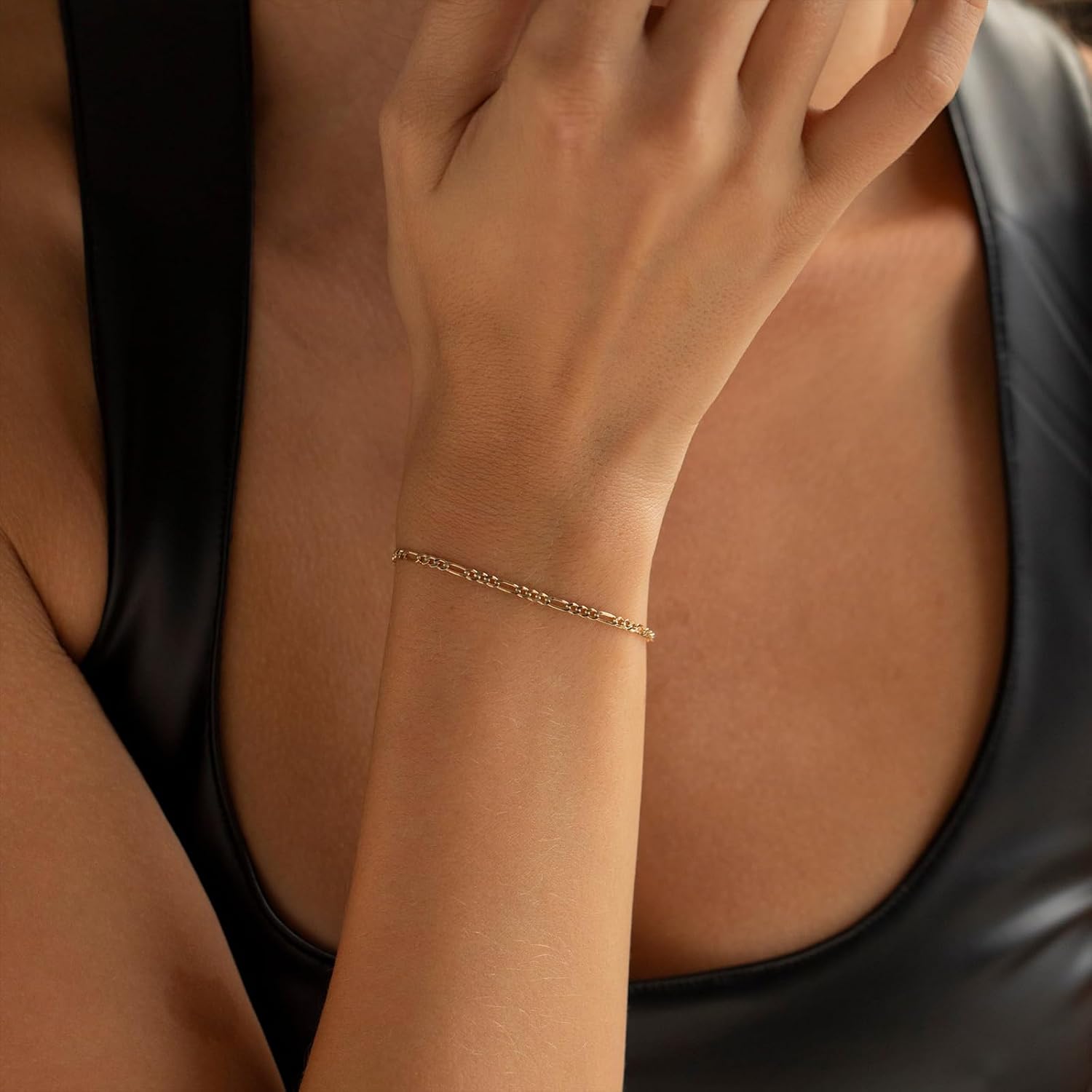
NOKMIT
In stock on Amazon
Check price on AmazonMid-Tier Profile: The Daily-Wear or Gift Buyer
If the bracelet will be worn every day — or if you’re buying for someone whose skin history you don’t fully know — gold-filled construction at the $30–$50 range is the right investment. The Knot’s “Gold-Filled vs. Gold-Plated Jewelry Guide” is consistent with what long-term wearers report: daily-wear gold-filled pieces routinely last five to fifteen years before showing any meaningful wear at contact points, compared to six to twelve months for standard plated pieces under the same conditions.
For gift buyers specifically, this construction gap matters because a bracelet that turns someone’s wrist green in four months is not a budget win — it’s a delayed disappointment. At the under-$50 ceiling, 14/20 gold-filled options exist from a range of mid-market brands. Look for the fraction stamp and the “GF” identifier before adding to cart.
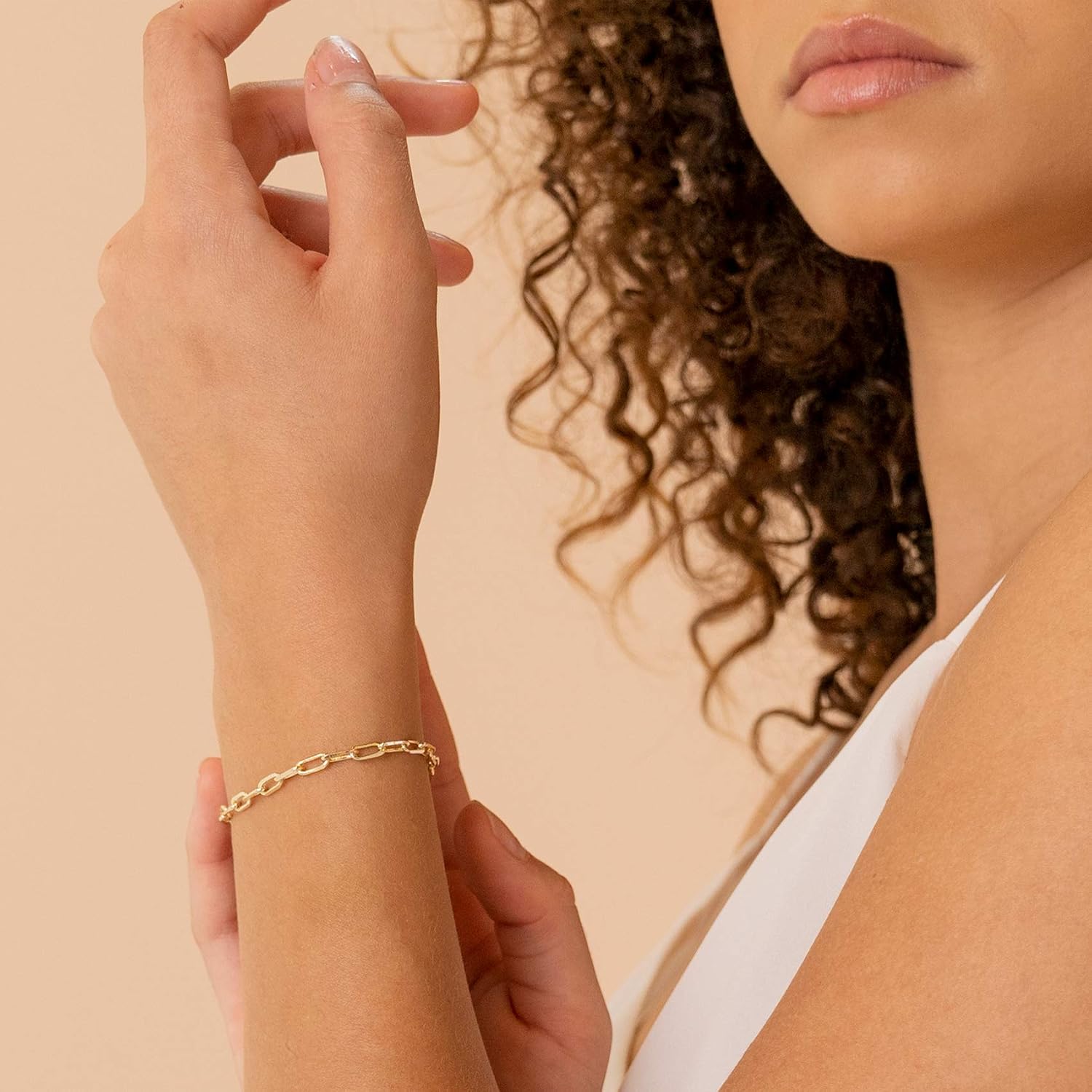
PAVOI
$16.95
In stock on Amazon
Check price on AmazonPractitioner Profile: The Stylist or Wardrobe Builder Stacking for a Client
For practitioners assembling stacked bracelet looks, the most cost-efficient approach is a hybrid construction strategy: use a 14/20 gold-filled chain or cuff as the anchor piece (worn closest to skin, subject to the most friction and sweat exposure), and pair it with lower-contact gold-plated accent pieces — thinner bands, charm-style pieces — that see less direct skin contact. This extends the visible lifespan of the overall stack without doubling the budget.
As Brides notes in its gold-filled guide, gold-filled pieces can be re-polished to restore luster in a way plated pieces cannot, which matters when a client’s signature stack needs to photograph consistently across multiple sessions. Clasp quality is the second variable to check: a lobster clasp on a gold-filled chain is a materially different durability proposition than a spring-ring clasp on a plated piece, and the combination of construction type and clasp engineering together predicts real-world lifespan better than price alone.

Kooljewelry
$52.00
In stock on Amazon
Check price on AmazonFive Rules That Apply Across All Three Profiles
Regardless of which buyer profile fits your current purchase, these five rules apply consistently at the under-$50 price tier:
-
“Gold” with no construction qualifier is always a question, not an answer. Ask for the stamp identifier before buying. Ambiguous labeling at this price point almost always indicates plated construction marketed to buyers who don’t know to ask.
-
The fraction on the stamp is the FTC’s promise. “14/20 GF” means something legally specific. “Gold-tone” or “gold-colored” means nothing except the finish approximates a gold appearance.
-
Skin sensitivity changes the calculus completely. Gold-filled construction is a straightforward hedge against base-metal exposure reactions. The premium over plated construction is small relative to the cost of a ruined gift experience or a contact dermatitis flare.
-
Clasp type is the most reliable secondary quality signal. In affordable bracelets, clasp engineering correlates with overall construction quality in ways that aren’t always visible in product photography.
-
Longevity math favors gold-filled even when upfront cost is higher. A $40 gold-filled bracelet that lasts ten years costs less per year of wear than a $22 gold-plated bracelet replaced annually. For daily-wear purchases, that arithmetic matters.
The under-$50 gold bracelet market is not a monolith. What reads as a comparable product on a retailer’s category page can span a 50x difference in actual gold content and a multi-year difference in wearable life. The stamps and the math tell the true story. The FTC’s Guides for the Jewelry, Precious Metals, and Pewter Industries give you the vocabulary; the GIA’s “Gold Jewelry Buying Guide” gives you the material science context; and The Knot’s and Brides’ coverage of gold-filled construction gives you the real-world performance benchmarks. Put those four sources together with the decision framework above, and no product listing at this price tier should be able to obscure what you’re actually buying.