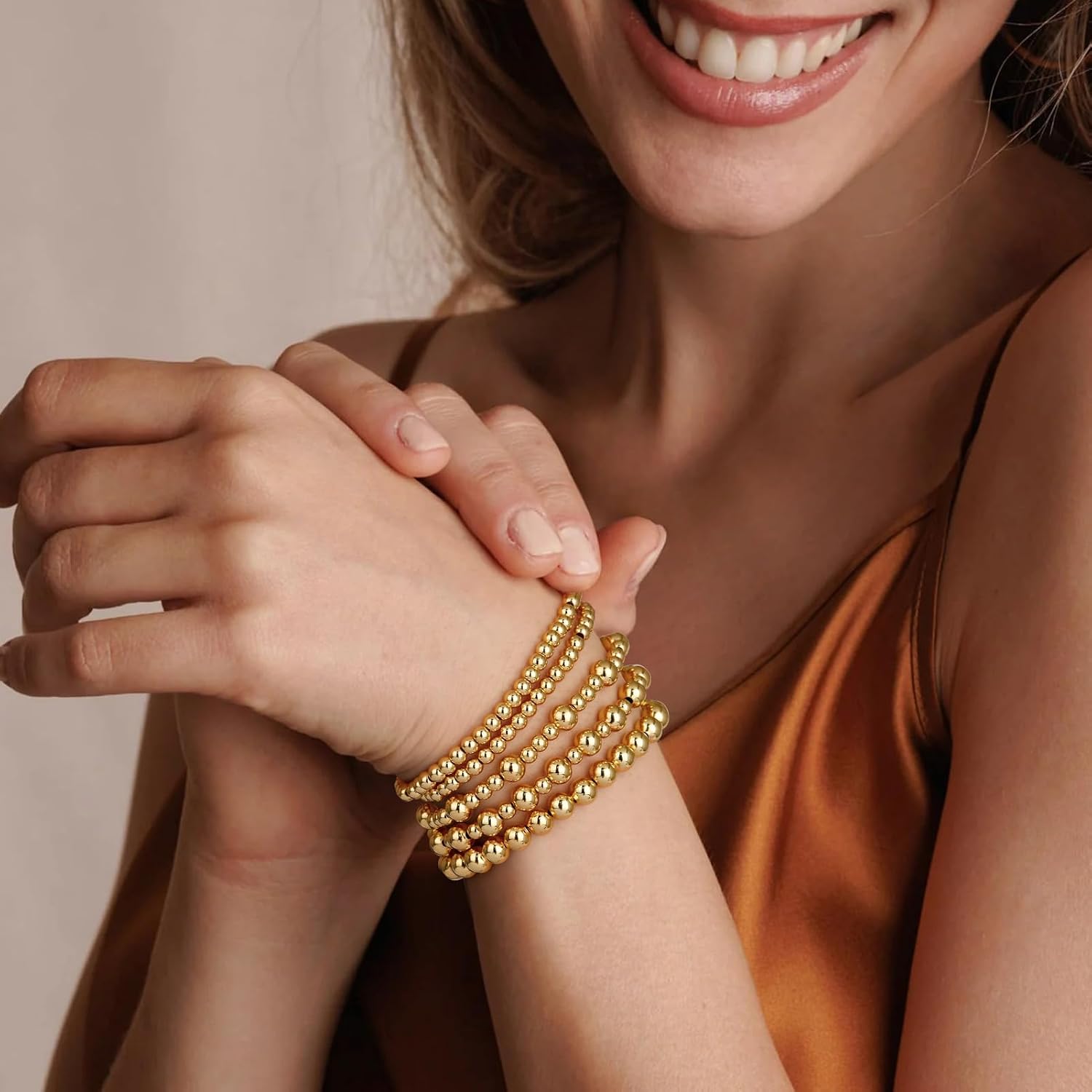
A beaded gold bracelet is exactly what it sounds like: individual beads — round or faceted, gold-plated, gold-filled, or solid gold — strung together into a wearable piece. What most buyers don’t realize until they’re mid-purchase (or mid-return) is that how those beads are held together determines almost everything: how long the bracelet lasts, how securely it sits on your wrist, how easy it is to resize, and whether it can be repaired when something goes wrong. The two dominant constructions are stretch elastic (beads threaded on a thin elastic cord that slips on without a clasp) and chain-linked (beads individually wired or set between chain segments, secured with a traditional clasp). This guide breaks down the real-world tradeoffs between the two so you can make a confident call — whether you’re buying a $45 everyday piece or a $600 solid-gold stack anchor.
The Core Engineering Difference (And Why It Changes Everything)
The stretch elastic bracelet is built around a single component doing all the work: the elastic cord itself. Typically made from polyurethane or silicone-based stretch thread, the cord is threaded through the bead holes, knotted, and sometimes glued at the terminus. There is no metal hardware between you and the bracelet fitting your wrist. The convenience is real: no clasp to fumble with, one-size-fits-most sizing, and a price point that stays low because the construction is fast.
Chain-linked beaded bracelets use a fundamentally different logic. Each bead is either wire-wrapped — a technique where a headpin or eyepin is looped around each bead and connected to the next link by hand — or set into pre-made chain with spacing segments. The whole piece terminates in a clasp: lobster claw, toggle, or box clasp being the most common. Every connection point is metal-to-metal. When something fails, it fails at one link, not along an entire cord. That distinction is the heart of this comparison.
Longevity: What Actually Breaks, and When
Budget Tier: Stretch Elastic ($20–$80)
Stretch elastic has a predictable failure mode: the cord degrades. Polyurethane stretch cord is sensitive to sweat, lotion, perfume, and repeated tension cycling. The GIA (Gemological Institute of America), in its published jewelry care guidance, notes that organic and synthetic cord materials are among the most maintenance-intensive components in beaded jewelry. Long-term owners across aggregated reviews report that even quality elastic cord on a daily-wear bracelet typically begins to show stretch and micro-fraying between 12 and 24 months of regular wear. The failure is rarely dramatic — the bracelet doesn’t snap mid-meeting. It gradually loses tension, beads begin to shift, and one day the knot gives. The repair is inexpensive (a jewelry supply shop can re-string for $10–$25) but it will recur.
The degradation accelerates with certain habits. Who What Wear’s stacked bracelet care coverage is explicit that applying wrist lotion, perfume, or sunscreen while wearing elastic-strung pieces is the fastest route to cord breakdown — the chemistry attacks the polyurethane. If you’re a daily-stack wearer who doesn’t want to think about removing jewelry before skincare routines, elastic construction will require more maintenance attention than most buyers anticipate at purchase.
At this price tier, the construction is honest: gold-plated beads (a base metal core with a micron-thin gold layer, per FTC karat marking guidelines) will show edge wear within one to three years of daily use regardless of stringing method. The cord’s lifespan roughly matches the metal finish’s realistic wear life.
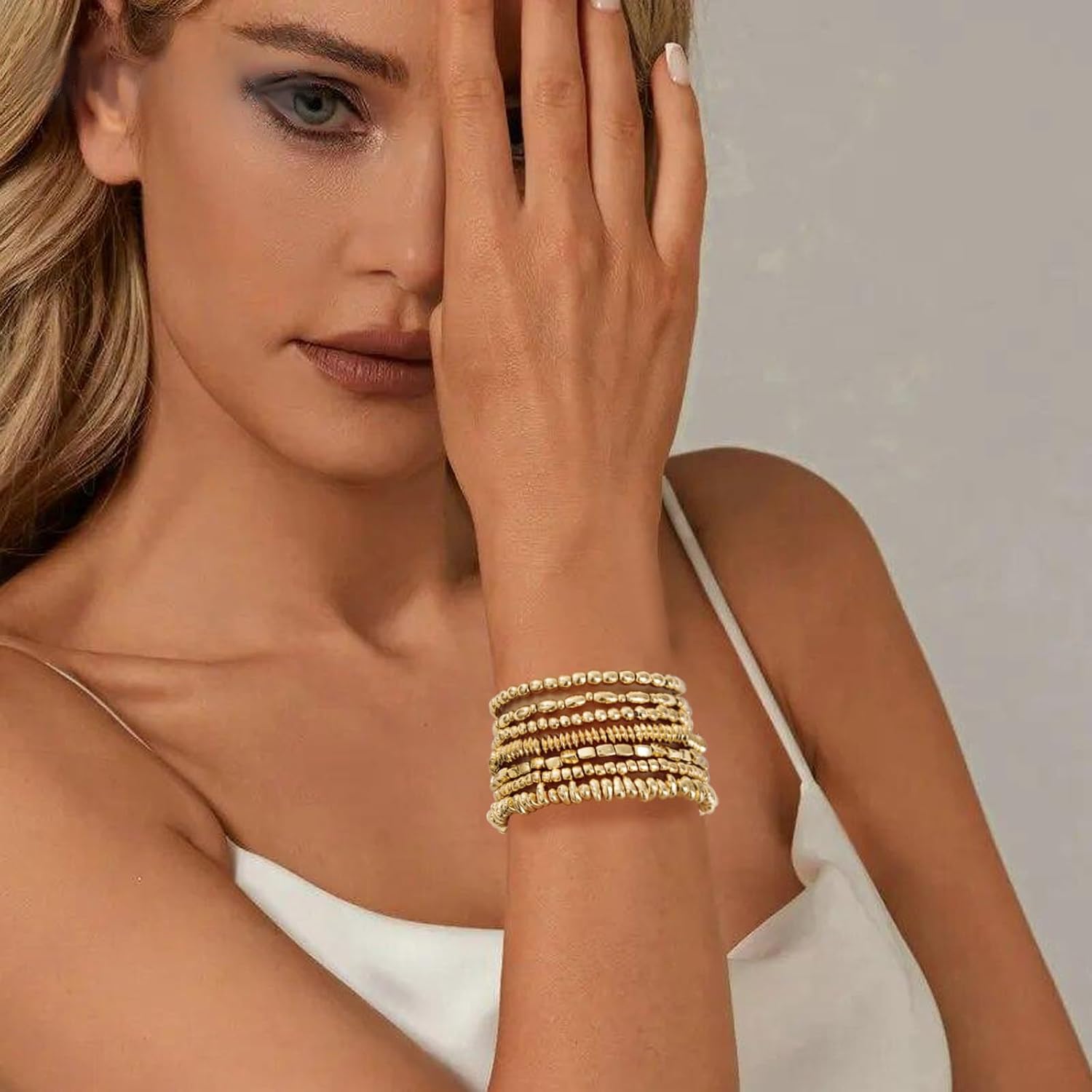
Gold
$9.99
In stock on Amazon
Check price on AmazonMid Tier: Gold-Filled, Either Construction ($80–$300)
The intermediate zone — gold-filled pieces in the $80–$300 range — is where the decision becomes genuinely close. Gold-filled construction involves a mechanical bonding of a real gold layer over a base metal core at a minimum of 1/20 gold by weight, a standard documented in FTC jewelry guidelines and explained in detail in The Knot’s gold bracelet buying guide. A well-made gold-filled bead bracelet can look excellent for five or more years with basic care, meaningfully outlasting plated alternatives.
Chain-linked at this tier makes the stronger structural case. The Knot’s gold bracelet buying guide describes wire-wrapped connections on quality gold-filled wire as essentially indefinitely durable under normal wear when executed correctly. A lobster clasp in gold-filled or gold-vermeil hardware is the standard repair point, and when it eventually wears loose, replacement runs $15–$40 and restores the bracelet to full function. Brides’ fine jewelry buying guide reinforces the point that chain-linked construction pays dividends over time precisely because individual failure points can be isolated and replaced.
Stretch elastic at this tier remains a reasonable choice only if price is the deciding factor and the buyer accepts re-stringing as a recurring maintenance line item rather than a sign that something went wrong. A gold-filled bracelet worn occasionally — not through daily workouts, dishes, and skincare — is a fair candidate for elastic. One intended as a true daily-wear stack anchor is better served by chain.
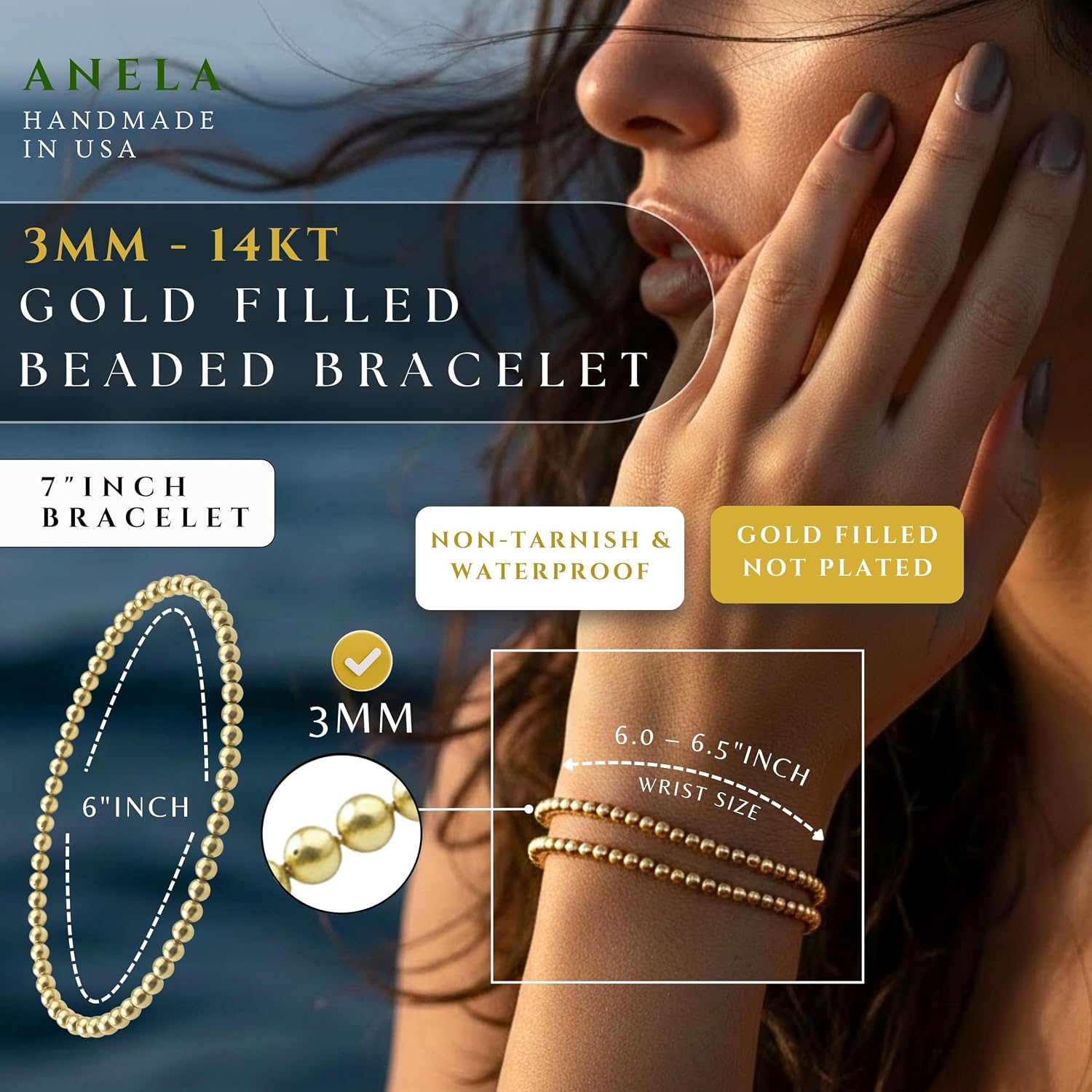
Anela
$36.85
In stock on Amazon
Check price on AmazonPremium Tier: Solid Gold Beads ($300–$1,500+)
As you move into solid gold bead territory — 10k, 14k, or 18k — the calculus inverts decisively. Vogue’s coverage of investment-grade gold jewelry frames solid gold pieces as multi-decade assets. Harper’s Bazaar’s best gold bracelets editorial coverage echoes the same premise: the value of solid gold is its permanence, and construction choices should honor that longevity. Brides’ fine jewelry buying guide states the practical consequence directly: the structural vulnerability introduced by elastic cord does not match the metal’s lifespan potential. The beads will outlive the cord by decades. Every jewelry professional perspective cited across these guides converges on the same recommendation — solid gold beads belong on chain or wire.
At this tier, chain-linked construction is not a preference; it is the structurally appropriate choice. Wire-wrapped solid gold links, properly executed, are indefinitely serviceable. Clasps — the honest vulnerability in any chain bracelet — are replaceable at standard jeweler rates. A solid gold beaded bracelet built on chain can be worn, stored, handed down, and repaired across generations. The same bracelet on elastic will need re-stringing within two years and represents a mismatch between the metal’s durability ceiling and the construction’s practical floor.
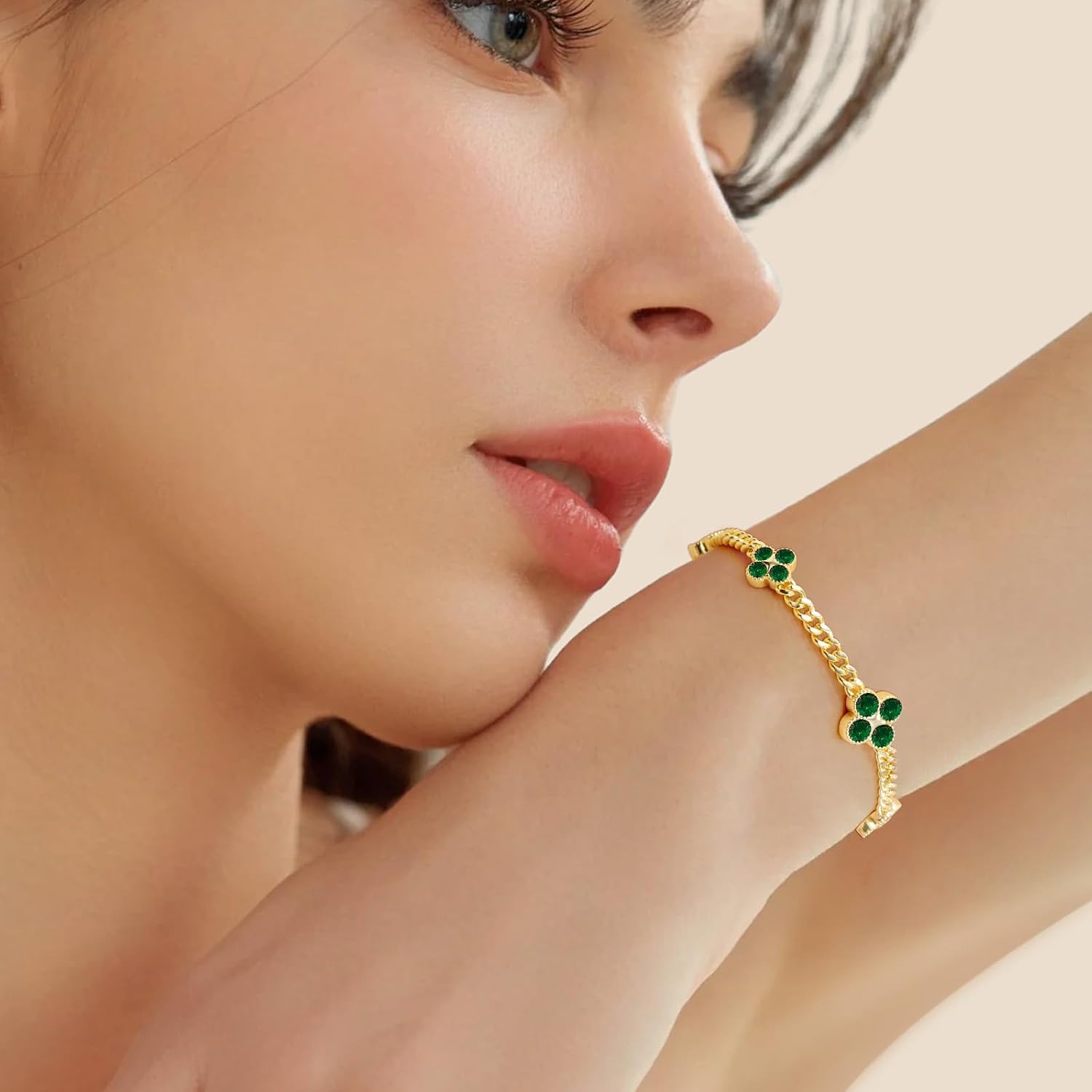
Birthstone
$49.99
In stock on Amazon
Check price on AmazonBy the Numbers
| Feature | Stretch Elastic | Chain-Linked | Gold — $9.99 |
|---|---|---|---|
| Typical first failure | 12–24 months daily wear | Clasp, 3–7+ years daily wear | Budget tier |
| Repair cost | $10–$25 re-string (recurring) | $15–$40 clasp replacement (infrequent) | Budget tier |
| Resizing | One-size-fits-most; no post-purchase adjustment | Jeweler adds/removes links (~$20–$40) | Budget tier |
| Feature | Stretch Elastic | Chain-Linked | Anela — $36.85 |
|---|---|---|---|
| Best metal match | Gold-plated, gold-filled ($20–$150) | Gold-filled through solid 14k ($80–$300+) | Mid tier |
| Daily-wear resilience | Moderate; cord degrades with lotion/sweat | High; metal-to-metal connections unaffected by skincare | Mid tier |
| Maintenance expectation | Re-string every 1–2 years | Clasp inspection annually; replace as needed | Mid tier |
| Feature | Stretch Elastic | Chain-Linked | Birthstone — $49.99 |
|---|---|---|---|
| Appropriate for solid gold | No — cord lifespan mismatches metal | Yes — indefinitely serviceable | Premium tier |
| Repairability | Full re-string required | Single-component clasp replacement | Premium tier |
| Long-term value | Low — recurring structural vulnerability | High — individual links isolate any failure | Premium tier |
Clasp Engineering as a Quality Signal
One of the most underappreciated quality differentiators in chain-linked beaded bracelets is the clasp choice. Reading past the bead design to evaluate this component reveals a lot about a bracelet’s real-world durability.
The Knot’s jewelry buying content identifies lobster clasps in 14k gold as the industry standard for fine bracelet construction: easy to operate one-handed, reliable spring mechanisms rated for years of daily use, and universally serviceable at any jeweler. Box clasps — a small rectangular insert that clicks into a slotted housing — appear in better Italian-chain construction and offer excellent security with a lower visual profile, but they require two hands to close and the mechanism can wear loose faster than a lobster claw on heavy daily-wear pieces.
Toggle clasps (a T-bar that passes through a ring) are a design-forward choice that appears often on beaded bracelets because they’re visually intentional — the toggle becomes part of the aesthetic. The tradeoff, noted consistently in Who What Wear’s jewelry coverage and brides.com’s bracelet styling content, is security: toggles rely on the bar seating in the ring by gravity and wrist angle. On a looser-fitting bracelet or one worn through active movement, the bar can work free. Owners who prefer toggle clasps consistently recommend sizing the bracelet snugly enough that the toggle doesn’t have room to swing perpendicular to the ring.
Stacking Considerations
For buyers building a stacked wrist — a layered arrangement of two or more bracelets worn simultaneously, a styling approach covered in depth by Who What Wear and Vogue’s bracelet content — the construction choice carries both aesthetic and practical implications.
Stretch elastic bracelets stack easily because they conform to the wrist without a rigid clasp interrupting the visual flow. The uniform tension distributes pieces naturally. The downside is migration: if one elastic piece is sized slightly looser than the others, it shifts and bunches during wear.
Chain bracelets in a stack require more intentional sizing because each clasp sits at a defined point on the wrist. On the upside, chain pieces hold their position better through movement. Stylists building client stacks — a use case covered in brides.com’s bridal jewelry styling content — frequently use one chain-linked anchor piece and fill the remaining positions with lighter elastic-strung bead pieces: structural reliability where it matters most, flexibility for the secondary pieces.
Harper’s Bazaar’s bracelet stack coverage notes the same pattern: a single well-constructed chain piece anchors the arrangement visually and physically, while elastic-strung pieces at lower price points allow the stack to grow without significant investment at every position.
The Decision Rule
If you’re buying in the $20–$150 range for everyday casual wear and you’re comfortable with re-stringing every one to two years, stretch elastic is a reasonable choice. The construction matches the metal tier and the convenience is genuine. Gold — $9.99
If you’re spending $300 or more, if the piece involves solid gold beads at any karat, if you want a bracelet you can put in a box for ten years and give as a meaningful gift, or if you wear lotion and perfume daily and have no intention of changing the habit: choose chain-linked construction. The clasp is a minor inconvenience compared to the structural mismatch of threading a fine gold piece on degrading elastic cord. Birthstone — $49.99
The intermediate buyer — gold-filled, daily wear, $80–$300 — should lean chain if longevity is the priority and elastic only if price is the deciding factor, with the explicit expectation that re-stringing is a recurring maintenance cost, not a one-time event. Anela — $36.85